
Learning Enhancement Support for 2026
At Mentone Grammar, our Learning Enhancement (LE) team partners with students, families, and teachers to ensure that every student can participate meaningfully in all areas of learning.
We know that learning support looks different for each child, so we work closely with families to provide clarity about the supports available and share how these can best meet individual needs.
Learning Enhancement Coordinators
| Campus | Year Level / House Group | Learning Enhancement Coordinator |
|---|---|---|
| Bayview | Year 7 | Anita Atkinson |
| Bayview | Year 8 | Jennie Valente |
| Greenways | Year 9 | Heather Stone |
| Frogmore | Anderson, Clark, Deighton, Were, White | Nicola Hardeman |
| Frogmore | Drinan, Finlay Anderson, Johnston, Jones, Lionel Large | Belinda McNeil |
How we use specialist reports
We value the recommendations made by psychologists, speech pathologists, paediatricians, and other professionals. These recommendations guide our understanding of your child’s learning profile. At the same time, we consider how your child is managing in the school environment. Adjustments are determined through collaboration with families and students, using:
- Specialist input
- Teacher observations
- Classroom performance
- Functional impact on learning
This ensures that support remains appropriate, evidence-based, and aligned with your child’s needs.
A visual overview of Learning Support across Years 7 – 12
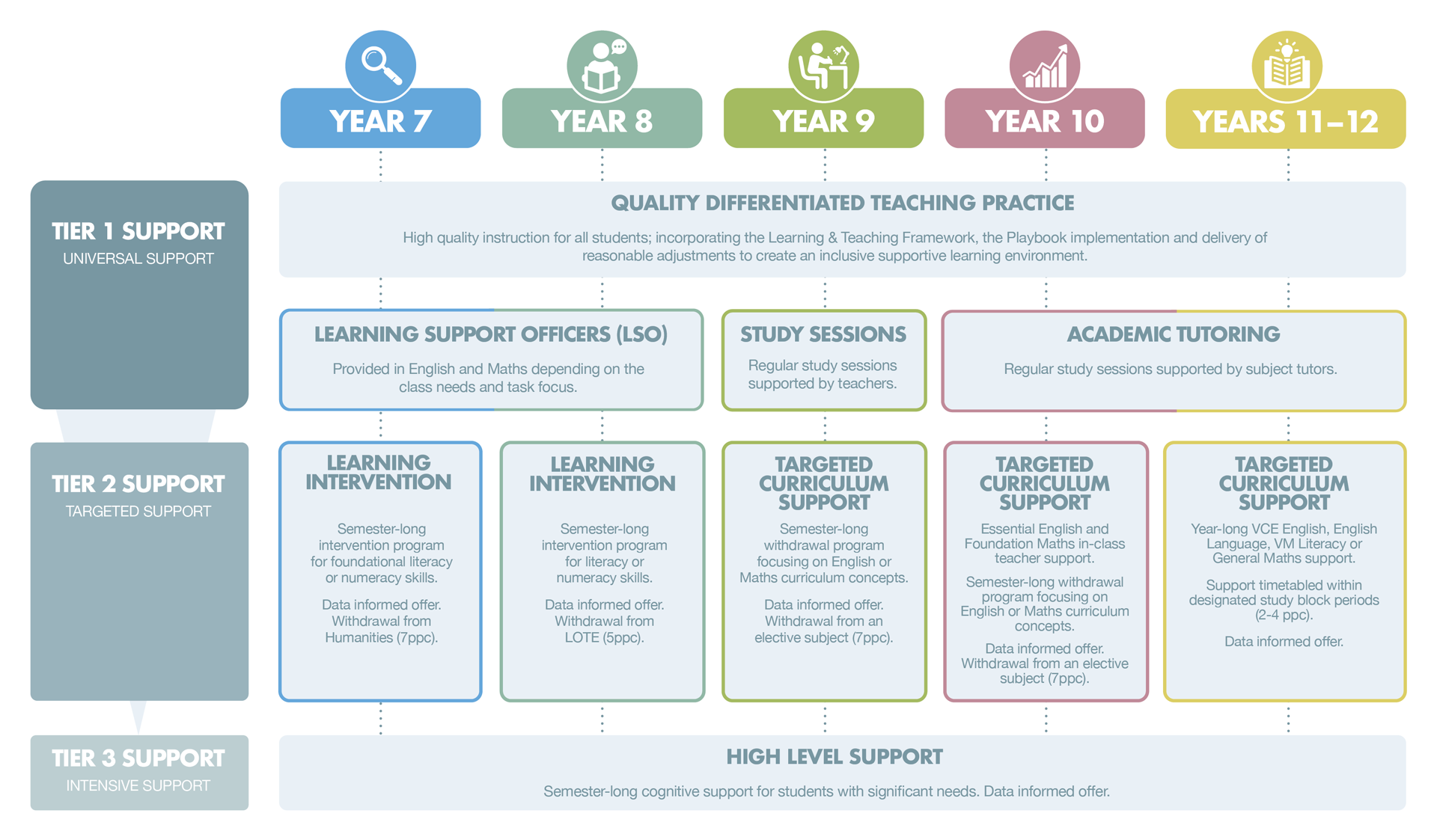
Understanding the Tiers of Support
Our approach to student support includes academic, wellbeing, and behavioural needs. Support is provided through Mentors, subject teachers, the Learning Enhancement and Wellbeing teams, and our campus wellbeing teams, including Year Level Coordinators and House Coordinators.
- Tier 1 – Universal Support: High-quality, inclusive teaching for all students, combined with positive wellbeing practices and pastoral care from mentors and campus teams.
- Tier 2 – Targeted Support: Short-term, small group targeted interventions for students who need extra help with specific skills or strategies. This may include literacy or numeracy intervention programs, as well as wellbeing check-ins or social-emotional supports.
- Tier 3 – Intensive Support: Highly individualised support for students whose disability, learning or wellbeing needs have a significant functional impact on their participation at school. This may include short-term or longer-term adjustments and, for a small number of students, a modified curriculum program.
Students can move between tiers as their needs change; the aim is always to provide the right level of support so they can learn and participate on the same basis as their peers, while building independence and self-advocacy skills for life beyond school.